
Every run creates a small wave of inflammation in your body. Micro-tears in muscle fibres, oxidative stress from increased oxygen consumption, and the repetitive impact of thousands of footstrikes all trigger an inflammatory response. In moderate amounts, this is actually a good thing. Inflammation is how your body signals repair and adaptation. It is part of the process that makes you fitter.
The problem starts when inflammation outpaces recovery. Heavy training weeks, back-to-back hard sessions, or the cumulative load of marathon preparation can tip the balance toward chronic, low-grade inflammation. That is when you start feeling perpetually heavy-legged, picking up minor injuries, or getting sick more often than usual.
This is where food comes in. While no single meal will erase the effects of overtraining, consistently including anti-inflammatory foods in your diet can help your body manage the repair process more efficiently. Several of these foods have been studied specifically in runners and endurance athletes, with measurable effects on recovery markers and muscle soreness.
Tart Cherries

You track your miles.
We'll handle the meals.
Try Fuel App NowBETAWill eventually be released to the Apple App Store and Android Play Store.


If there is one food with the most runner-specific research behind it, it is tart cherries. The deep red colour comes from anthocyanins, a class of polyphenols with potent anti-inflammatory and antioxidant properties. Multiple randomized controlled trials have studied tart cherry juice in runners, and the results are consistently promising.
In a study of 54 runners competing in the Hood to Coast relay, those who drank tart cherry juice twice daily for seven days before and on race day reported significantly less pain than the placebo group. [1] A separate trial with London Marathon runners found that cherry juice drinkers recovered isometric muscle strength faster and had lower levels of inflammatory markers in their blood after the race. [2]
The research suggests that the benefits come primarily from a loading period rather than a single dose. Most effective protocols used five to seven days of supplementation before the event. [3] You do not need to buy expensive juice either. Frozen tart cherries blended into a post-run smoothie, or stirred into overnight oats, deliver the same anthocyanins.
One important caveat: because tart cherries reduce inflammation, some sports scientists suggest avoiding them during heavy training blocks where the inflammatory response is part of the adaptation stimulus. They may be most useful in the days surrounding races or particularly demanding sessions where recovery, not adaptation, is the priority.
The Tart Cherry Smoothie is one of the easiest ways to load up on anthocyanins right after a run:
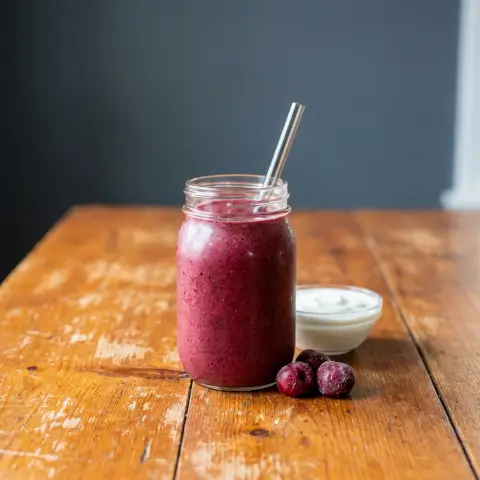
Tart Cherry Smoothie
Fatty Fish and Omega-3s
Omega-3 fatty acids, specifically EPA and DHA found in fatty fish, are among the most well-researched anti-inflammatory nutrients in sports science. A 2024 systematic review of randomized controlled trials found that omega-3 supplementation consistently reduced inflammatory markers including IL-6, TNF-alpha, and C-reactive protein following exercise-induced muscle damage. [6] [7] [8]
The mechanism is straightforward. EPA and DHA get incorporated into the membranes of your cells, including muscle cells and immune cells. From there, they serve as precursors for compounds called resolvins and protectins, which actively help resolve inflammation rather than just blocking it. This is fundamentally different from how NSAIDs work, which simply suppress the inflammatory signal.
For runners, the practical takeaway is to include fatty fish like salmon, mackerel, sardines, or trout at least two to three times per week. A single serving of salmon delivers roughly 1.5 to 2 grams of omega-3s. If fish is not a regular part of your diet, a fish oil supplement providing around 2 to 3 grams combined EPA and DHA per day is a well-supported alternative.
The timing matters less than the consistency. Unlike tart cherries, omega-3s work through long-term membrane incorporation rather than acute dosing. It takes weeks of regular intake to meaningfully shift your omega-3 status.
The Salmon Poke Bowl puts this into practice – salmon for omega-3s, sushi rice for glycogen, avocado for potassium:
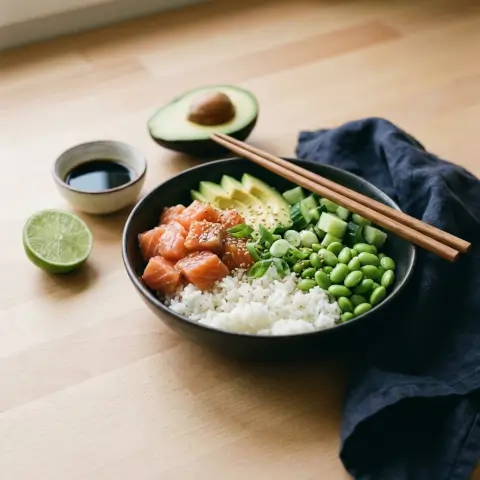
Salmon Poke Bowl
Turmeric and Curcumin
Turmeric gets its bright yellow colour from curcumin, a polyphenol that has been studied extensively for its anti-inflammatory effects. In the context of exercise, multiple trials have found that curcumin supplementation reduces delayed-onset muscle soreness and lowers inflammatory markers after eccentric exercise and downhill running.
A pilot trial of 20 men found that 200 mg of curcumin taken twice daily, starting two days before and ending one day after downhill running, reduced lower limb pain and showed significantly less MRI evidence of muscle injury in the thighs compared to placebo. [4] Another trial with 28 men found that curcumin taken before and after exhaustive lower limb resistance exercise produced significantly lower soreness at 48 and 72 hours. [5]
There is an important caveat here that most food content glosses over. The trials cited above used 200 to 400 mg of bioavailable curcumin — a supplement dose, not a dietary one. Turmeric spice contains only 2 to 5% curcuminoids by weight, which means you would need to eat 4 to 9 grams of turmeric daily to approach 200 mg of curcumin — and even then, standard curcumin is poorly absorbed without enhancement. Cooking with turmeric, even regularly and alongside fat and black pepper, cannot realistically deliver a therapeutic anti-inflammatory dose.
This does not mean turmeric in your cooking is worthless. Fat and piperine from black pepper do improve absorption meaningfully, and consistent dietary inclusion contributes alongside other anti-inflammatory foods in your overall pattern. But if you are dealing with significant muscle soreness or training at high volume, the research points to bioavailability-enhanced curcumin supplements — liposomal or phytosome formulations — as the effective delivery method, not the spice rack.
The Turmeric & Berry Overnight Oats include turmeric with fat and black pepper for the best dietary absorption possible:
The Turmeric & Berry Overnight Oats combine turmeric, black pepper, and fat in a single make-ahead recipe – everything needed for meaningful absorption:
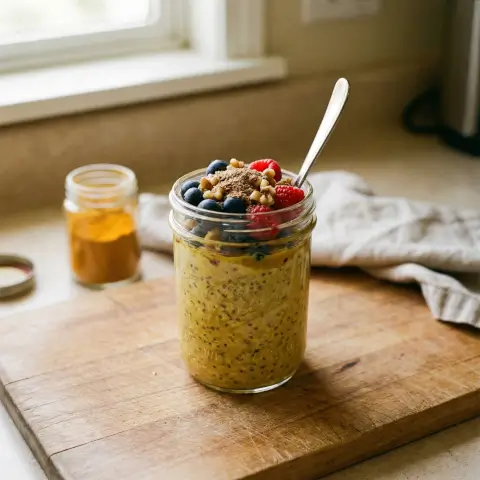
Turmeric & Berry Overnight Oats
Beetroot
Beetroot is better known in running circles for its performance-boosting nitrate content, but it also has notable anti-inflammatory properties. Beets are rich in betalains, the pigments responsible for their deep red colour, which have been shown to reduce markers of systemic inflammation including C-reactive protein. [11] [12]
The nitrate pathway is relevant here too. Dietary nitrates convert to nitric oxide in the body, which improves blood flow and oxygen delivery to working muscles. Better blood flow supports more efficient delivery of nutrients to damaged tissue and removal of metabolic waste products, indirectly supporting the recovery process.
For runners, beets serve a dual purpose. A concentrated beetroot shot two to three hours before a hard session can improve exercise economy, while regularly including beets in post-run meals supports the anti-inflammatory environment your body needs for recovery. Roasted beets in a grain salad, blended into a smoothie, or juiced into a recovery drink all work well.
The Beetroot & Ginger Run Shot is built around this dual role – a concentrated pre-run dose of nitrates and betalains in one small glass:
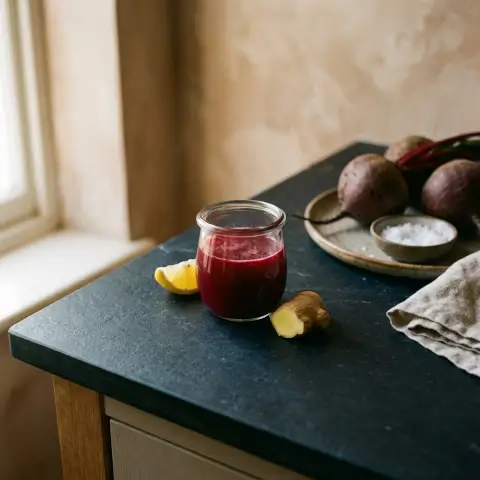
Beetroot & Ginger Run Shot
Ginger
Ginger contains gingerols and shogaols, bioactive compounds with anti-inflammatory properties that work through similar pathways to curcumin, specifically by inhibiting COX-2 and NF-kB, two key drivers of the inflammatory cascade. While ginger has been less extensively studied in runners specifically compared to tart cherries or omega-3s, the broader exercise science literature shows promising effects on muscle soreness.
Multiple randomized controlled trials have found that ginger supplementation can reduce exercise-induced muscle soreness, with one study showing 23 to 25 percent pain reductions 24 hours after eccentric exercise, though the effect is generally more modest than what has been observed with curcumin or tart cherry. [9] [10] Where ginger shines for runners is in its dual role as both an anti-inflammatory agent and a digestive aid. Many runners deal with nausea during or after hard efforts, and ginger has well-established anti-nausea properties.
There is an important distinction between ginger's two main benefits for runners. The anti-nausea effect — well-established from pregnancy and chemotherapy research — appears at lower doses of around 0.5 to 1.5g per day, which is achievable through dietary use. The anti-inflammatory effect on post-exercise cytokines is a different story: studies showing reductions in IL-6, TNF-α, and IL-1β in runners used 2g per day of powdered ginger consistently for 6 to 12 weeks. That is a supplement-level dose, and a thumb of fresh ginger in a smoothie or a slice of banana bread is unlikely to get you there.
The practical takeaway: cooking with ginger regularly is worthwhile for the anti-nausea benefit and as part of a broader anti-inflammatory dietary pattern — but if your goal is reducing post-exercise inflammation measurably, a ginger supplement is more reliable than the spice rack, just as with curcumin.
The Ginger Pecan Banana Bread contributes to regular dietary ginger intake, which supports the anti-nausea angle especially useful on long run days:
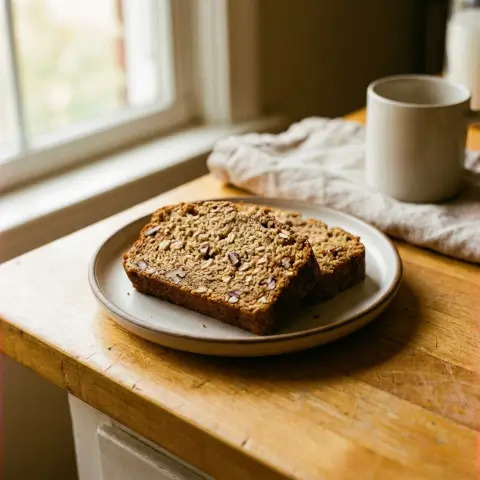
Ginger Pecan Banana Bread
Berries
Blueberries, blackberries, raspberries, and strawberries are all rich in anthocyanins and other polyphenols that contribute to their anti-inflammatory effects. While the research is not as targeted toward runners as the tart cherry literature, broader exercise studies show that berry consumption can reduce oxidative stress and inflammatory markers after strenuous exercise.
Berries are also a practical choice because they pair naturally with so many runner-friendly meals. They go into overnight oats, smoothies, yogurt bowls, and pancakes without requiring any special preparation. Frozen berries are nutritionally equivalent to fresh and significantly cheaper, making them an easy year-round staple.
The Mediterranean Beet & Quinoa Salad combines berries, beets, and greens in a single post-run meal – three categories covered at once:
Building an Anti-Inflammatory Plate
The most effective approach is not loading up on a single superfood but building a consistent dietary pattern that includes multiple anti-inflammatory foods across your meals. A post-run smoothie with tart cherries, berries, and ginger covers three categories in one glass. A dinner of salmon with roasted beets and quinoa covers two more.
The common thread across all of these foods is that they are whole, minimally processed, and rich in polyphenols, omega-3s, or both. They also happen to be the types of foods that support running performance more broadly through their carbohydrate, protein, and micronutrient profiles.
What matters most is consistency over intensity. Eating salmon once will not change your inflammatory status. Eating it three times a week for months will. The same goes for adding berries to your breakfast, cooking with turmeric and ginger regularly, and reaching for tart cherries in the days around your hardest sessions.
The Coconut Curry with Rice brings turmeric, ginger, and a solid carbohydrate base together in one dish – a full anti-inflammatory plate without having to think about it:

Coconut Curry with Rice
The Right Recovery Foods, Timed to Your Training
This is exactly how we approach recipes at Fuel.fit. Every recipe is tagged with its training context, so post-run meals are built around ingredients that support recovery and reduce inflammation. Tart cherry smoothies, turmeric overnight oats, salmon poke bowls, and beetroot salads are all in the catalog, designed specifically for the window after your run when your body needs the most help bouncing back.
Want recovery meals built around the foods in this article? Fuel.fit gives you runner-tested recipes tagged by timing, so your post-run nutrition does double duty.
Sources
[1] Kuehl KS, Perrier ET, Elliot DL, Chesnutt JC. Efficacy of tart cherry juice in reducing muscle pain during running: a randomized controlled trial. J Int Soc Sports Nutr. 2010;7:17.
[2] Howatson G, McHugh MP, Hill JA, et al. Influence of tart cherry juice on indices of recovery following marathon running. Scand J Med Sci Sports. 2010;20(6):843-852.
[3] Vitale KC, Hueglin S, Broad E. Tart cherry juice in athletes: a literature review and commentary. Curr Sports Med Rep. 2017;16(4):230-239.
[4] Drobnic F, Riera J, Appendino G, et al. Reduction of delayed onset muscle soreness by a novel curcumin delivery system (Meriva): a randomised, placebo-controlled trial. J Int Soc Sports Nutr. 2014;11:31.
[5] Mallard AR, Briskey D, Richards A, Rao A. Curcumin improves delayed onset muscle soreness and postexercise lactate accumulation. J Diet Suppl. 2021;18(5):531-542.
[6] Rahimi MH, Nasir Y, Nouri Saeidlou S, et al. Effect of omega-3 fatty acids supplementation on inflammatory markers following exercise-induced muscle damage: systematic review and meta-analysis. Sci Sports. 2024;39(5-6):e167-e176.
[7] Kyriakidou Y, Wood C, Ferrier C, Dolci A, Elliott B. The effect of omega-3 polyunsaturated fatty acid supplementation on exercise-induced muscle damage. J Int Soc Sports Nutr. 2021;18(1):9.
[8] Dominguez-Balmaseda D, Geribaldi-Doldan N, Gould D, et al. Omega-3 fatty acid supplementation on post-exercise inflammation, muscle damage, oxidative response, and sports performance in physically healthy adults: a systematic review. Nutrients. 2024;16(13):2044.
[9] Black CD, Herring MP, Hurley DJ, O'Connor PJ. Ginger (Zingiber officinale) reduces muscle pain caused by eccentric exercise. J Pain. 2010;11(9):894-903.
[10] Wilson PB. A randomized double-blind trial of ginger root for reducing muscle soreness and improving physical performance recovery among experienced recreational distance runners. J Diet Suppl. 2020;17(2):121-132.
[11] Milton-Laskibar I, Martinez JA, Portillo MP. Current knowledge on beetroot bioactive compounds: role of nitrate and betalains in health and disease. Foods. 2021;10(6):1314.
[12] Clifford T, Howatson G, West DJ, Stevenson EJ. The potential benefits of red beetroot supplementation in health and disease. Nutrients. 2015;7(4):2801-2822.
[13] Shoba G, Joy D, Joseph T, Majeed M, Rajendran R, Srinivas PS. Influence of piperine on the pharmacokinetics of curcumin in animals and human volunteers. Planta Med. 1998;64(4):353-356.