
For most runs, you don't need to eat anything. Head out, do your thing, eat when you get back. But once you've been out long enough that your glycogen stores start running low, something shifts. The pace that felt easy starts to feel like work. Your legs go heavy. Your focus drifts. That's your body asking for fuel.
Learning to feed it while you're moving is one of the most useful things you can develop as a runner. And it's simpler than most people think.
When to Start Eating
For runs under 60 minutes, you don't need to eat anything on the move. Your glycogen stores are sufficient, and eating during a short effort adds complexity without benefit.
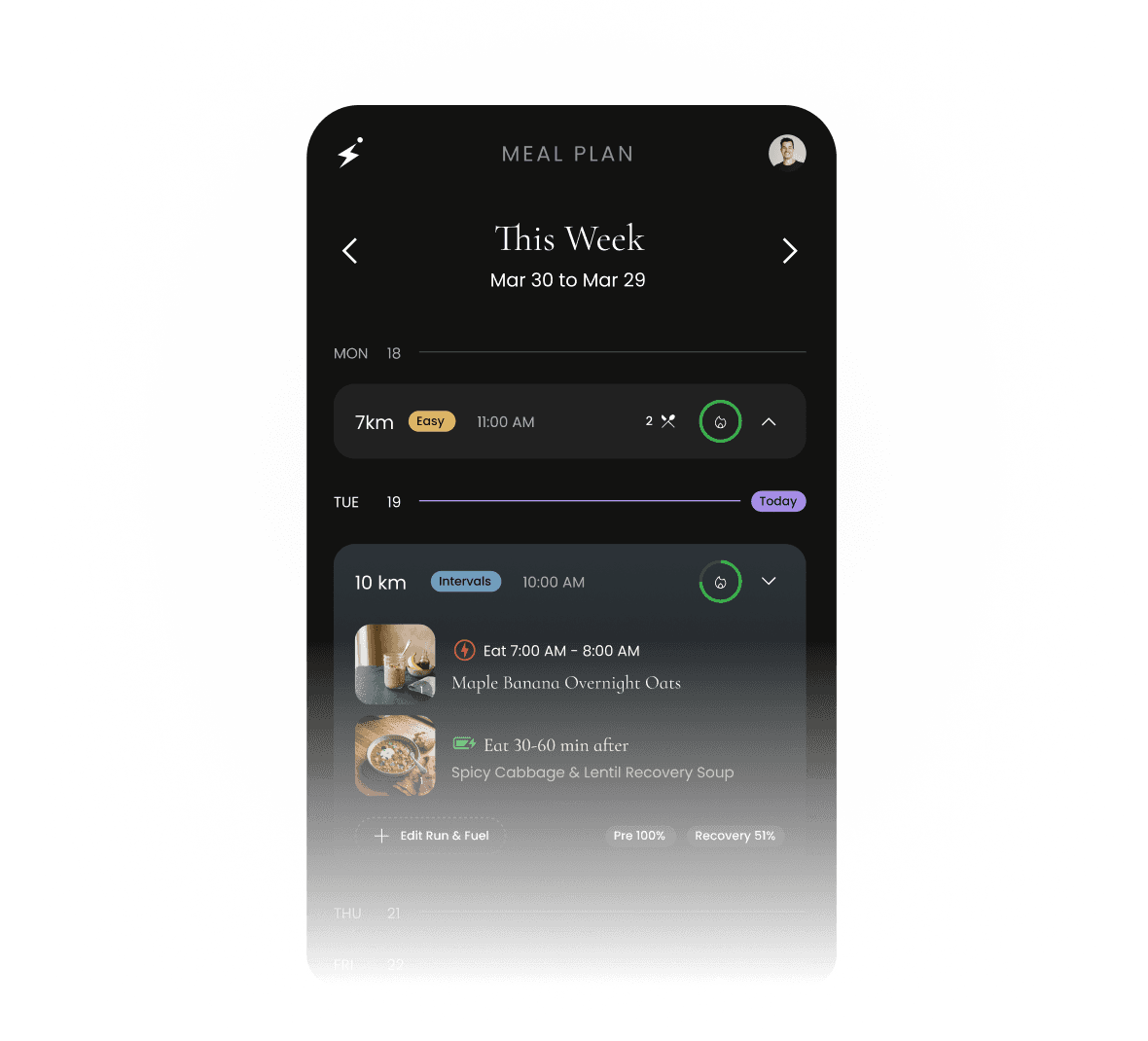
You track your miles.
We'll handle the meals.
Try Fuel App NowBETAWill eventually be released to the Apple App Store and Android Play Store.


Once you're running longer than 60-75 minutes, the guidance changes — and this is where most runners get it wrong. The instinct is to wait until you feel the energy drop: the heavy legs, the fading rhythm, the growing sense of effort. That's the wrong signal to wait for. By the time depletion registers as a feeling, your glycogen is already critically low and your body's ability to absorb and use carbohydrates is impaired. Playing catch-up from that point is hard.
The evidence-based approach is proactive, not reactive: start fuelling around 30 to 45 minutes into your run, before you need it, and take something every 30 minutes after that. Consistent, early intake keeps your glycogen topped up and your gut working steadily — which is far more effective than one large intake late in a run when your stomach is under stress.
What to Eat
Simple carbohydrates are what you're after. Your body needs something it can absorb quickly while you're moving, and that means foods based on natural sugars – dates, banana, honey, maple syrup, rice cakes. These digest fast and give your muscles the energy they need without sitting heavy in your stomach.
One thing worth knowing: glucose and fructose together absorb faster than either one alone, because they use different transport pathways in the gut. [1] This is why honey, maple syrup, and dates work so well as running fuel – they naturally contain both. It's also why homemade options can be just as effective as commercial gels.
The traditional guideline was a 2:1 glucose-to-fructose ratio, and this remains adequate for most recreational runners at 30-60g per hour. More recent research suggests a 1:0.8 ratio — slightly more fructose relative to glucose — achieves higher carbohydrate oxidation rates and is better suited to longer efforts or higher intake targets. In practice, foods like honey and maple syrup naturally sit close to a 1:1 ratio, which falls between the two and works well without needing to calculate anything. For most runners, aim for 30 to 60 grams of carbohydrate per hour from everything you consume on the move — gels, dates, bananas, chews, sports drinks, all of it counts toward that total. More trained runners targeting faster marathon times can work up to 60 to 90 grams of carbohydrates per hour from all sources combined — gels, chews, dates, bananas, sports drinks, everything you take on the move counts toward that total — but only with deliberate gut training in the weeks beforehand.
Fat, fiber, and protein all slow things down. A protein bar or a handful of nuts might feel like real food, but during a run they'll sit in your gut and cause more problems than they solve. Save those for after.
Here are two recipes you can make at home and test on your next long run:
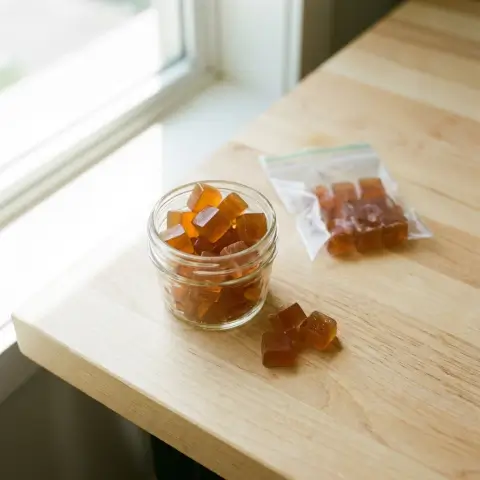
Homemade Energy Gummies
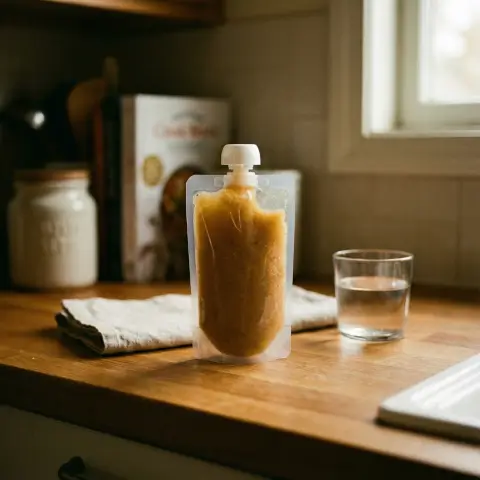
Homemade Honey & Banana Energy Gel
And if you prefer chewing over squeezing a packet:
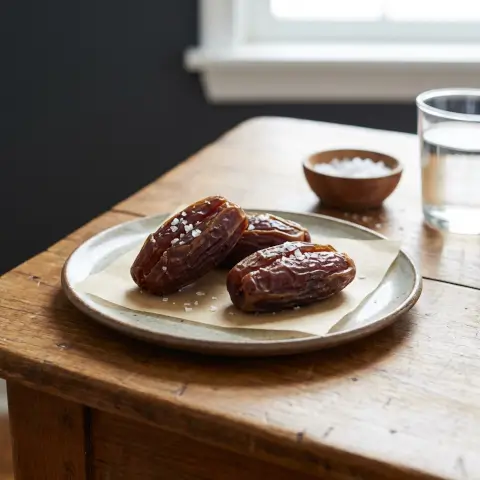
Medjool Date & Sea Salt Chews
Drinking While You Run
Fuel and hydration work together. A drink that combines carbohydrates with a small amount of salt covers both fueling and fluid replacement at once – which is simpler and easier on your stomach than taking a gel and chasing it with a bottle of plain water.
Keep it dilute. Too much sugar in a drink pulls water into your gut and causes bloating. A small amount of maple syrup, a pinch of salt, lemon juice, and water does the job simply:

Maple Citrus Electrolyte Drink
Practice Before Race Day
This is the part most runners skip and then regret on race day.
Your gut needs to learn how to process food while you're running. It's a trainable skill, and research shows that consistently practicing with carbohydrates during training meaningfully improves your gut's ability to absorb fuel under effort. [2] If you never practice eating during training runs, your stomach won't be ready when it counts.
Start small – a single date, a few sips of an electrolyte drink – and gradually build the amount over several weeks. By the time a race or a hard long run comes around, your body already knows what to do.
The golden rule: never try anything new on race day. Every food, every drink, every amount should be something you've already tested. Your race day nutrition should be boring because you've done it so many times before.
Fuel.fit tags all during-run recipes separately from pre-run and recovery meals – so when you're planning a long effort, you're only seeing options built for eating on the move.
Sources
[1] Jentjens RL, Moseley L, Waring RH, Harding LK, Jeukendrup AE. Oxidation of combined ingestion of glucose and fructose during exercise. J Appl Physiol. 2004;96(4):1277-1284.
[2] Cox GR, Clark SA, Cox AJ, et al. Daily training with high carbohydrate availability increases exogenous carbohydrate oxidation during endurance cycling. J Appl Physiol. 2010;109(1):126-134.