
Sleep is the most underrated recovery tool in running. More than ice baths, compression tights, or post-run stretching routines – the hours you spend asleep are when your body actually repairs muscle damage, consolidates training adaptations, and releases growth hormone. Everything else is noise by comparison.
What most runners don't realize is that what you eat, and when you eat it, has a measurable effect on how well you sleep. Not dramatically – nutrition isn't a sleep cure – but consistently enough that it's worth understanding.
Why Sleep Matters So Much for Runners
During sleep your body doesn't switch off. It gets to work. Muscle protein synthesis continues. Growth hormone is released primarily during deep sleep. The central nervous system consolidates motor patterns and technical adaptations from the day's training. Inflammatory markers from the day's effort get processed and resolved.
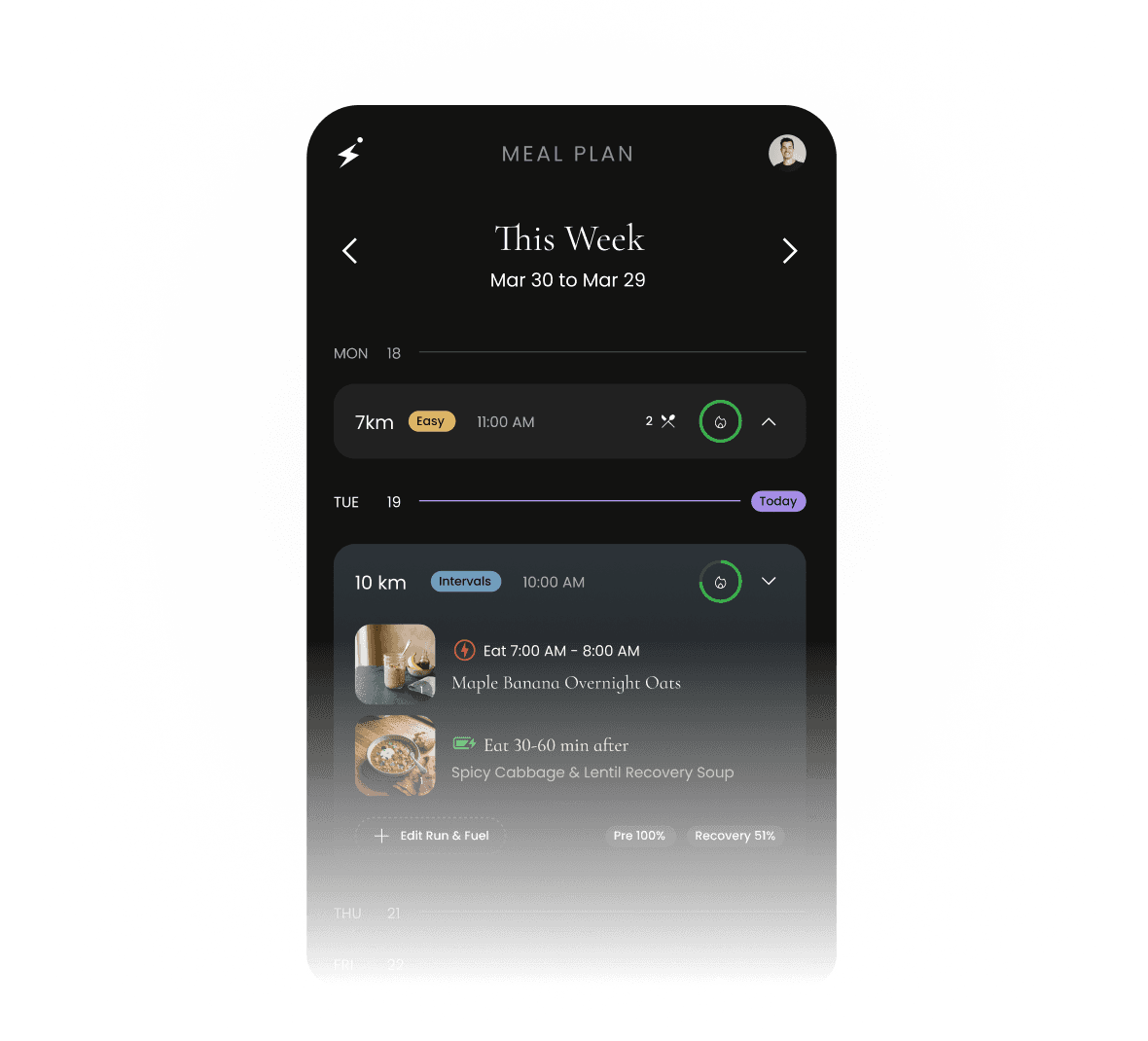
You track your miles.
We'll handle the meals.
Try Fuel App NowBETAWill eventually be released to the Apple App Store and Android Play Store.


Shortchange sleep consistently and the compounding effect on adaptation is significant – more so than most training variables that get far more attention. The question is what you can do nutritionally to protect it.
What the Research Actually Shows
A 2022 systematic review of dietary factors and sleep in athletically trained populations found that the composition and timing of evening meals has more influence on sleep quality than total daily nutrient intake. [1] In other words, what you eat at dinner matters more than how much protein you hit across the whole day.
The most consistent finding from that review: high glycemic index carbohydrates consumed after evening exercise appear to promote sleep, while caffeine consumed before evening training reliably impairs it.
The carbohydrate finding has a plausible mechanism. High GI carbohydrates raise insulin, which promotes the selective uptake of competing amino acids into muscle, allowing tryptophan – a precursor to serotonin and then melatonin – to cross into the brain more easily. A randomized crossover study of recreational athletes found that a high GI meal immediately after evening sprint training increased total sleep time and sleep efficiency compared to a low GI meal of identical calories. [2] The effect was real but modest – this is not a dramatic intervention, and it's unlikely to overcome poor sleep hygiene or significant life stress.
The Caffeine Window
The caffeine finding is less subtle. Research shows that caffeine consumed even 6 hours before bedtime can reduce total sleep time by over an hour. [3] For runners who train in the evening and rely on a pre-run coffee or caffeinated gel, this is the most actionable piece of the picture.
If you run in the evening and you're sleeping poorly, caffeine timing is the first variable worth examining. The practical rule is to cut caffeine at least 6 hours before you plan to sleep, and ideally earlier if you're a slow metabolizer – which you can roughly estimate by how sensitive you are to afternoon coffee.
Tryptophan-Rich Foods in the Evening
Tryptophan is the amino acid precursor to serotonin and melatonin. Foods naturally high in it include turkey, eggs, dairy, nuts, seeds, and legumes. The research on tryptophan and sleep in athletes is promising but not definitive – the systematic review flagged it as showing moderate potential, particularly for runners eating adequate total protein around 1.6 grams per kilogram per day. [1]
The practical takeaway isn't to obsess over tryptophan content at dinner, but to ensure your evening meal includes a quality protein source alongside carbohydrates rather than carbohydrates alone.
These recovery meals cover both angles – carbohydrates and a quality protein source that includes tryptophan:
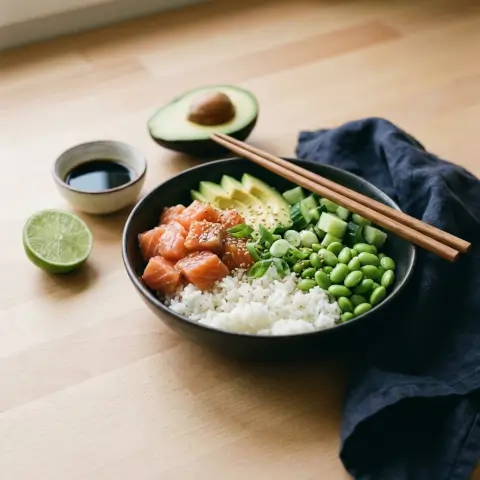
Salmon Poke Bowl
Tart Cherry and Melatonin
Tart cherries are one of the few whole foods that contain meaningful amounts of melatonin directly, alongside anti-inflammatory anthocyanins. The systematic review identified tart cherry juice as having among the highest potential to promote sleep in athletes. [1] The same research that shows benefits for post-run muscle recovery also suggests sleep quality improvements, which makes tart cherries genuinely dual-purpose in the post-run window.
The Tart Cherry Smoothie works here both as a recovery meal and a sleep-supporting evening option after harder sessions:
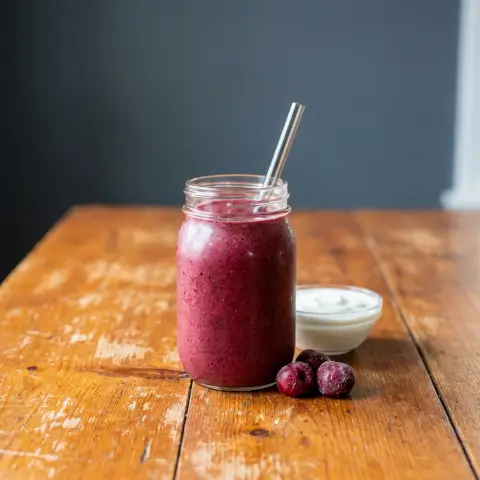
Tart Cherry Smoothie
Magnesium
Magnesium is widely discussed in running circles as a sleep aid, and the evidence is more mixed than the supplement industry suggests. Magnesium does play a role in muscle function, nerve transmission, and regulating the body's stress response – all relevant to runners. Some studies show benefits for sleep quality and muscle cramp reduction at doses around 300 to 350 mg daily. [4] Others, including a 10-week study in marathon runners, found no significant benefit from supplementation.
The honest picture: if your diet is genuinely low in magnesium – common in runners with restricted eating patterns or limited vegetable variety – supplementation or dietary attention may help. If you're already eating a varied diet with nuts, seeds, leafy greens, and whole grains, the marginal benefit is less clear. Food first, as always. Almonds, pumpkin seeds, dark chocolate, and spinach are all solid dietary sources.
The Underrated Variable: Not Undereating
There's one nutrition-sleep interaction that doesn't get discussed enough in running circles. Runners who chronically undereat relative to their training load – particularly on high mileage days – often report disrupted sleep even when they're exhausted. The body's stress response to energy deficit elevates cortisol, which is incompatible with deep, restorative sleep.
If you're sleeping poorly and training hard, the first question worth asking isn't which supplement to try. It's whether you're eating enough overall, particularly on your hardest training days. Adequate evening carbohydrates and a quality protein source are both important – not just for sleep, but for the recovery that sleep is supposed to deliver.
What Actually Moves the Needle
In rough order of evidence strength for runners:
Avoiding caffeine in the 6 hours before sleep is the highest-impact change available to most runners. Eating a balanced evening meal with both carbohydrates and protein is consistently associated with better sleep metrics than skewed macronutrient patterns. Tart cherry, whether as juice or in a smoothie, has genuine support for both sleep and recovery. Magnesium is worth ensuring through food; supplementation is a reasonable option if dietary intake is poor.
Everything else – specific timing windows, precise tryptophan targets, melatonin supplements – is second-order detail for most runners. Get the basics right consistently, and sleep will do more for your running than almost anything else in your training plan.
Fuel.fit tags every recipe by training context – recovery meals include the carbohydrate and protein balance your body needs to make the most of the sleep that follows.
Sources
[1] Driller MW, Dunican IC, Fitzgerald BM, et al. The impact of dietary factors on the sleep of athletically trained populations: a systematic review. Nutrients. 2022;14(17):3469.
[2] Vlahoyiannis A, Aphamis G, Andreou E, et al. Effects of high vs. low glycemic index of post-exercise meals on sleep and exercise performance: a randomized, double-blind, counterbalanced polysomnographic study. Nutrients. 2018;10(11):1795.
[3] Drake C, Roehrs T, Shambroom J, Roth T. Caffeine effects on sleep taken 0, 3, or 6 hours before going to bed. J Clin Sleep Med. 2013;9(11):1195-1200.
[4] Zhang Y, Chen C, Lu L, et al. Association of magnesium intake with sleep disorders reported by US adults: National Health and Nutrition Examination Survey (NHANES) 2005-2016. Sleep. 2022;45(4).